“The most powerful weapon on earth is the human soul on fire.”
Ferdinand Foch
As the eldest of eight children, I learned very quickly that silence was a risky strategy!
In a household of ten people, if you wanted your opinion heard, your question answered, or your story told, you had to speak up. Waiting politely for a pause in the conversation was generally a futile exercise because someone else was undoubtedly poised to jump in before you!
So I learned to talk. Actually, that’s not quite true. I learned to debate.
My Mum and Dad actively encouraged discussion around the dinner table and in the living-room. Books, religion, politics, current affairs, education, world events, family decisions, the evening news, nothing was off limits. Questions were welcomed. Disagreement was allowed. Opinions were expected.
As a child and later as a teenager, I particularly enjoyed sparring with my dad. Whilst we may have rolled our eyes at each other sometimes at the futility of the other’s point of view – I really enjoyed the passionate exchange of ideas and opinions (looking back now I realise his patience with me at some of my more ‘out there’ notions and can now accept with humility, he was often right in what he said). I suspect my dad enjoyed the debating too, although he might not always have admitted it!
I remember one day after an especially energetic exchange he looked at me and asked:
“Do you actually wake up talking, Fiona?”
The answer was, and remains, somewhat embarrassingly:
“Well…yes.” To be fair, I also go to bed talking!
While this may have occasionally tested the patience of those around me, it gave me something that I now realise was a tremendous gift. Long before anyone used phrases like student voice, critical thinking or active citizenship, I was learning that ideas matter. That questions matter. That thoughtful disagreement has value. That curiosity is something to be nurtured rather than silenced.
Most importantly, I was learning that my voice had worth.
Then, of course, we arrive at school. Schools rightly teach us to listen. Teachers carry expertise and experience. Learning requires concentration and attention. Yet I have often reflected on the fact that while family life encouraged me to question, challenge and debate, school could sometimes encourage the opposite. Sit still. Listen carefully. Put your hand up. Wait your turn. There is, of course, a place for all of that.
But education has always been about more than acquiring knowledge. It is about developing judgement. It is about learning to think. It is about wrestling with difficult ideas, considering different viewpoints, questioning assumptions and gradually building the values, character and citizenship that will shape our contribution to the world.
The best classrooms are not simply places where information is transmitted. They are places where ideas are explored. I was fortunate that one of the schools I attended understood this deeply.
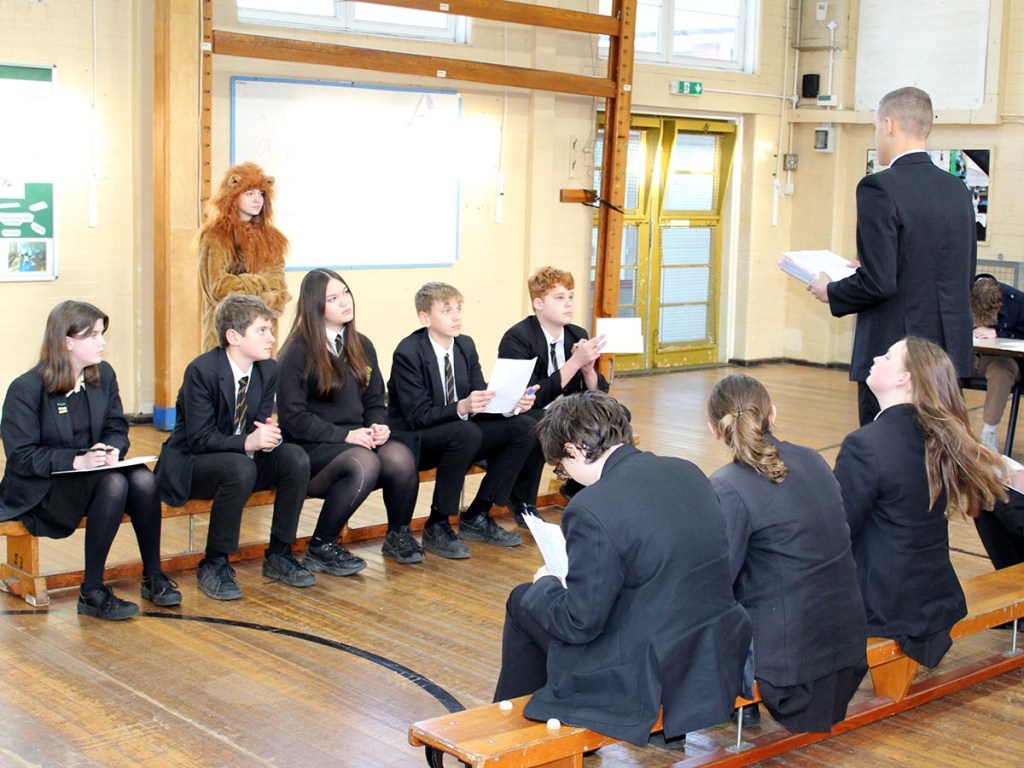
Debating was not an activity reserved for a handful of naturally confident pupils. It was compulsory. Public speaking was expected. Entering competitions locally, nationally, across Ireland and throughout the UK was actively encouraged. At the time, standing to speak in front of an audience (especially of ones peers) often felt daunting. Looking back now, I realise what an extraordinary gift that school gave us.
Debating taught me how to think, how to listen and prepare a response. Public speaking taught me how to organise and articulate ideas. Listening taught me empathy. Encountering opposing opinions taught me respect. Being challenged taught me humility. Being heard built confidence.
As young women, we were encouraged to stand proudly in our own shoes. We were encouraged to use our voices in whatever rooms we entered. We were encouraged to articulate our opinions confidently and respectfully. We were certainly never encouraged to soften our (Belfast) accents to make ourselves more acceptable to other people. For that, I remain immensely grateful.
The older I get, the more I appreciate how unusual and valuable that experience was.
Over the years, I have often thought about voice in the context of education. As a classroom teacher, I used my voice every day. To explain. To instruct. To question. To challenge. To encourage. To reassure. To praise. To correct. To celebrate. To deliver a curriculum and bring learning alive.
Teachers sometimes underestimate the power of their words, I think. Long after pupils have forgotten the details of a lesson, they remember what a teacher said to them. A sentence of encouragement can stay with a young person for decades. So can an expression of belief at precisely the moment it was needed.
I hope that, in some small way, my voice helped young people to find their own.
Leadership, however, changes how a voice is used. As a principal and now as a System Leader Partner, I find myself speaking less about specific lessons and more about people. Less about the experiences of my own classroom and more about the conditions that allow great teaching and learning to flourish in every classroom.
I hope as a leader, I have used my voice to advocate for pupils when they needed somebody to speak on their behalf. I hope I have used it to support and champion the staff I have been privileged to work alongside and lead.
I hope I have used it to articulate the purpose and importance of education and the extraordinary difference schools can make to children, young people and communities.
Over the course of my career, I have found myself sitting around many tables where decisions were being made and influence was being exercised. Some were school meetings. Some involved local communities. Others involved regional educational policy and reform.
At moments such as these, I have often returned to a simple belief.
There is absolutely no point being in a room of possible influence and remaining quiet.
If we have been given a seat at the table, we have a responsibility to contribute.
Not for ourselves. But for the people who are not there. For the pupils. For the teachers. For the parents. For the communities. For those whose voices may not otherwise be heard. Perhaps that is one of the most important responsibilities of educational leadership. To be a voice for the voiceless and an advocate for the very best educational provision for every child and young person.
A few weeks ago, I was fortunate enough to secure a ticket to hear President Barack Obama speak in Belfast. As I listened, I found myself reflecting on another occasion more than a decade earlier, when I sat in the Waterfront Hall in 2013 with some of my pupils as he addressed a packed audience of sixth-form students.
The atmosphere that day was electric. You could almost feel possibility in the room.
One of Obama’s most enduring observations remains as relevant today as it was then: “Change will not come if we wait for some other person or some other time. We are the ones we’ve been waiting for. We are the change that we seek.”
What strikes me now is that meaningful change has always depended upon people finding the courage to use their voice. Not the loudest voice. Not the most polished voice. Simply the willingness to stand up and contribute. To ask the difficult question. To challenge respectfully. To advocate constructively. To speak when silence would be easier.
Ultimately, one of the greatest responsibilities entrusted to educators is not simply to develop knowledge but to develop voice.
Every classroom contains future leaders, teachers, engineers, nurses, carers, entrepreneurs, artists, volunteers, parents and citizens. Our responsibility is not merely to prepare them for examinations. It is to help them develop the confidence to participate fully in society.
The educational philosopher Paulo Freire captured this beautifully when he wrote:
“Education does not change the world. Education changes people. People change the world.”
What an extraordinary privilege that is. I still ask too many questions. I still enjoy a good debate and dialogue. I still probably talk far more than I should! My family would undoubtedly confirm all three! But, I remain deeply grateful to those who taught me not to be afraid of using my voice.
Because voice matters. It shapes confidence. It shapes opportunity. It shapes influence. It shapes change. And perhaps one of the greatest gifts we can give the children and young people in our care is the confidence to believe that their voice matters too. The world does not need more silent spectators. It needs thoughtful, informed and compassionate voices.
And education, at its very best, helps young people discover that they already have a voice and so as educators and parents, we give them the language, confidence and permission to express it.


Leave a Reply